
We hope you enjoy these short bios of historical figures who have developed theories or made important contributions to flow measurement and instrumentation. These pioneers are organized according to their birth months.
January
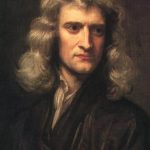
Isaac Newton (Jan. 4, 1643 – March 31, 1727) and Leibniz developed the calculus independently, although Newton didn’t fully publish his work until 1704. This was 20 years after Leibniz published his findings. In 1687, Newton described universal gravitation and the three laws of motion. Newton also contributed to optics and astronomy.
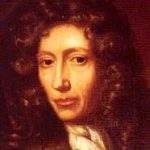
Robert Boyle (Jan. 25, 1627 – Dec. 31, 1691) is regarded by many as the first modern chemist. He formulated the law that the volume of a gas varies inversely with pressure during an exchange with Franciscus Linus, a Jesuit critic. This principle is now known as Boyle’s Law. He worked with Robert Hooke to improve the air pump, and did experiments with air properties.
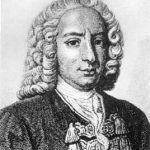
Daniel Bernoulli (Jan. 29, 1700 – March 17, 1782) formulated what is known today as Bernoulli’s theorem. This principle states that, in a flowing stream, the sum of a fluid’s static energy, kinetic energy, and potential energy is conserved across a constriction in the pipe.
January 5, 1988: ABB begins operations
February
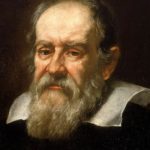
Galileo Galilei (Feb. 15, 1564 – Jan. 8, 1642) was an Italian astronomer, physicist, and philosopher who made a significant break from the thinking of Aristotle. He is sometimes considered “the father of modern physics.” He made major improvements to the telescope. Galileo was the first to report lunar mountains and craters, and among the first to observe sunspots. He was a strong advocate of Copernicanism, which put him at odds with the church of his day.
February 1, 1953: Endress+Hauser founded
March
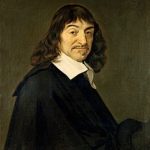
Rene Descartes (March 31, 1596 – Feb. 11, 1650) is known as “the father of modern philosophy.” In mathematics, he invented the Cartesian coordinate system and analytic geometry. His most famous statement was, “I think, therefore I am.”
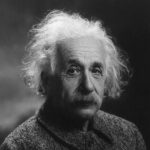
Albert Einstein (March 14, 1879 – April 18, 1955) is considered by many to be one of the greatest physicists of all time. He is best known for his theory of relativity, but also made major contributions to quantum theory and statistical mechanics. Einstein was born in Germany, but in the 1930s was granted permanent residence in the U.S. and became a citizen in 1940.
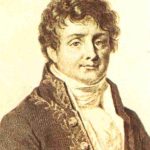
Jean Baptiste Joseph Fourier (March 21, 1768 – May 16, 1830) was a French physicist and mathematician who is known for investigating the Fourier series and its application to problems of heat flow. The Fourier transform is named after him. In 1827, Fourier observed that atmospheric gases might increase the earth’s temperature — later be called the greenhouse effect.
April
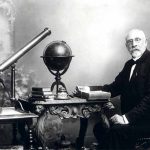
Vincenc Strouhal (April 10, 1850 – Jan. 26, 1922) was a Czech physicist specializing in experimental physics. He was one of the founders of the Institute of Physics of the Czech part of Charles University. The Strouhal number is named after him.
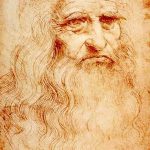
Leonardo da Vinci (April 15, 1452 – May 2, 1519) made the first recorded observation of the vortex shedding phenomenon over 400 years ago. He observed the formation of vortex swirls downstream of a rock in a stream of water.
May
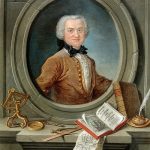
Henri Pitot (May 3, 1695 – Dec. 27, 1771) was a French hydraulic engineer and the inventor of the Pitot tube.
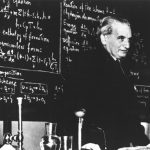
Theodore von Karman (May 11, 1881 – May 6,1963) made early studies in 1912 on the use of bluff bodies and vortex swirls. The series of vortex swirls are now called the von Karman vortex street.
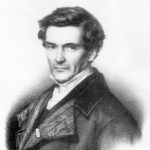
Gaspard-Gustave Coriolis (May 21, 1792 – Sept. 19, 1843) is well known for his work on the Coriolis effect. The Coriolis effect forms the basis for the operation of Coriolis flowmeters today. He was also the first person to apply the term “work” to the product of force and distance.
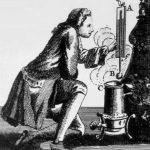
Daniel Gabriel Fahrenheit (May 24, 1686 – Sept. 16, 1736) was a German physicist and engineer who determined a temperature scale now named after him.
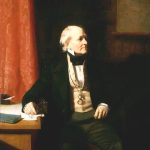
Sir Francis Beaufort (May 27, 1774 – Dec. 17, 1857) was an Irish born hydrographer and officer in Britain’s Royal Navy. Beaufort was the creator of the Beaufort scale for indicating wind force.
May 20, 1873: Blue jeans invented
June
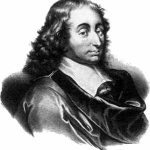
Blaise Pascal (June 19, 1623 – August 19, 1662) made important contributions to the study of hydraulic fluids. He also helped establish the principles and value of the barometer.
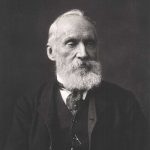
Lord Kelvin (June 26, 1824 – Dec. 17, 1907), whose real name was William Thompson, is known for developing the Kelvin scale of absolute temperature measurement. He also made contributions to thermodynamics and the mathematical analysis of electricity.
July
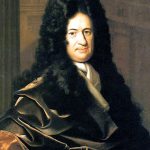
Gottfried Wilhelm Leibniz (July 1, 1646 – Nov. 14, 1716) invented calculus independently of Newton, and his notation is still in use today. He made major contributions to many fields, including philosophy, biology, psychology, and medicine. In philosophy, he was known for the idea that this is the best of all possible worlds, and was both a rationalist and a pluralist.
August
Guillaume Amontons (Aug. 31, 1663 – Oct. 11, 1705) was a French scientific instrument inventor and physicist. He was one of the pioneers in tribology, along with Leonardo da Vinci, John Theophilus Desaguliers, Leonhard Euler, and Charles-Augustin de Coulomb.
September
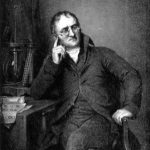
John Dalton (Sept. 6, 1766 – July 27, 1844) is best known for his early work on and statement of atomic theory. He kept a meteorological diary for 57 years, and published a book of essays on his meteorological observations. He is also known for his research into color blindness.
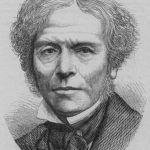
Michael Faraday (Sept. 22, 1791 – Aug. 25, 1867) is best known in the history of flow for formulating Faraday’s Law of Electromagnetic Induction. According to this principle, a voltage is developed when a conductor is passed through a magnetic field, and the resulting voltage is proportional to the velocity of the conductor moving through the field. This principle underlies the operation of magnetic flowmeters today.
September 1, 1915: Yokogawa founded
September 24, 1890: Emerson Electric founded
October
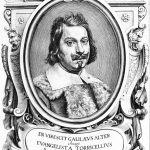
Evangelista Torricelli (Oct. 15, 1608 – Oct. 25, 1647) is best known for inventing the barometer. His invention came as a way to solve a practical problem of getting water to rise above 10 meters, using a suction pump. Torricelli created a tube filled with mercury, and the mercury column fell to about 28 inches. The height of the column rose and fell with changing atmospheric pressure. This invention was the first barometer. A unit of pressure, the torr, was named after Torricelli.
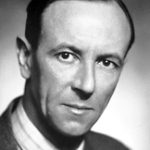
Sir James Chadwick, (Oct. 20, 1891 – July 24, 1974) was an English Nobel laureate in physics awarded for his discovery of the neutron.
Osborne Reynolds (October 23, 1842 – Feb. 21, 1912) is known in the history of flow for his formulation of the Reynolds number. This number states the relation between the inertial forces and the viscous forces in a flowing stream. The Reynolds number reflects how turbulent or laminar flow is in a flowstream.
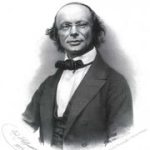
Wilhelm Eduard Weber (Oct. 24, 1804 – June 23, 1891) was a German physicist. During his years as professor at the University of Gottingen, he worked with Carl Friedrich Gauss. Together, they invented the first electromagnetic telegraph.
October 12, 1847: Siemens founded
November
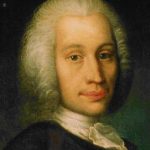
Anders Celsius (Nov. 27, 1701 – April 25, 1744) is known in the history of temperature for proposing the Celsius temperature scale. This scale originally had 0 for the boiling point of water and 100 for the freezing point. The scale was later reversed to the form it has today.
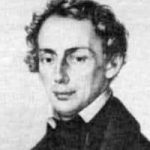
Christian Doppler (Nov. 29, 1803 – March 17, 1853) is known for proposing what is today called the Doppler effect. This has to do with the apparent change in wavelength and frequency of a wave perceived by the observer to be moving relative to the wave source. The Doppler effect is the principle that underlies the operation of today’s Doppler flowmeters.
November 12, 1998: Flow Research founded
December
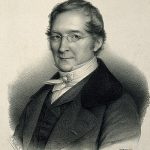
Joseph Louis Gay-Lussac (Dec. 6, 1778 – May 9, 1850) is known for being the first to formulate what has come to be known as Charles’ Law. According to this law, a gas expands linearly with a fixed pressure and rising temperature. While Gay-Lussac was the first to publish this law, in 1802, he referenced unpublished work by Jacques Charles from about 1787. For this reason, the principle has become known as Charles’ Law. Gay-Lussac also discovered, with Alexander von Humboldt, that the composition of the atmosphere does not change with decreasing pressure.

Ernst Werner von Siemens (known as Werner von Siemens) (Dec. 13, 1816 – Dec. 6, 1892) was a German inventor and industrialist. Siemens’ name has been adopted as the SI unit of electrical conductance, the siemens. He was also the founder of the electrical and telecommunications company Siemens.
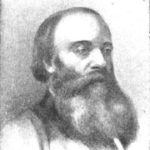
James Prescott Joule (Dec. 24, 1818 – Oct. 11, 1889) was a student of John Dalton. He helped develop the absolute scale of measurement by working with Lord Kelvin. He also formulated what is now known as Joule’s law, which governs the relationship between current flowing through a substance, resistance, and heat dissipated. The joule, the SI unit of work, is named after him.
December 1, 1906: Yamatake (Azbil) founded
Article