
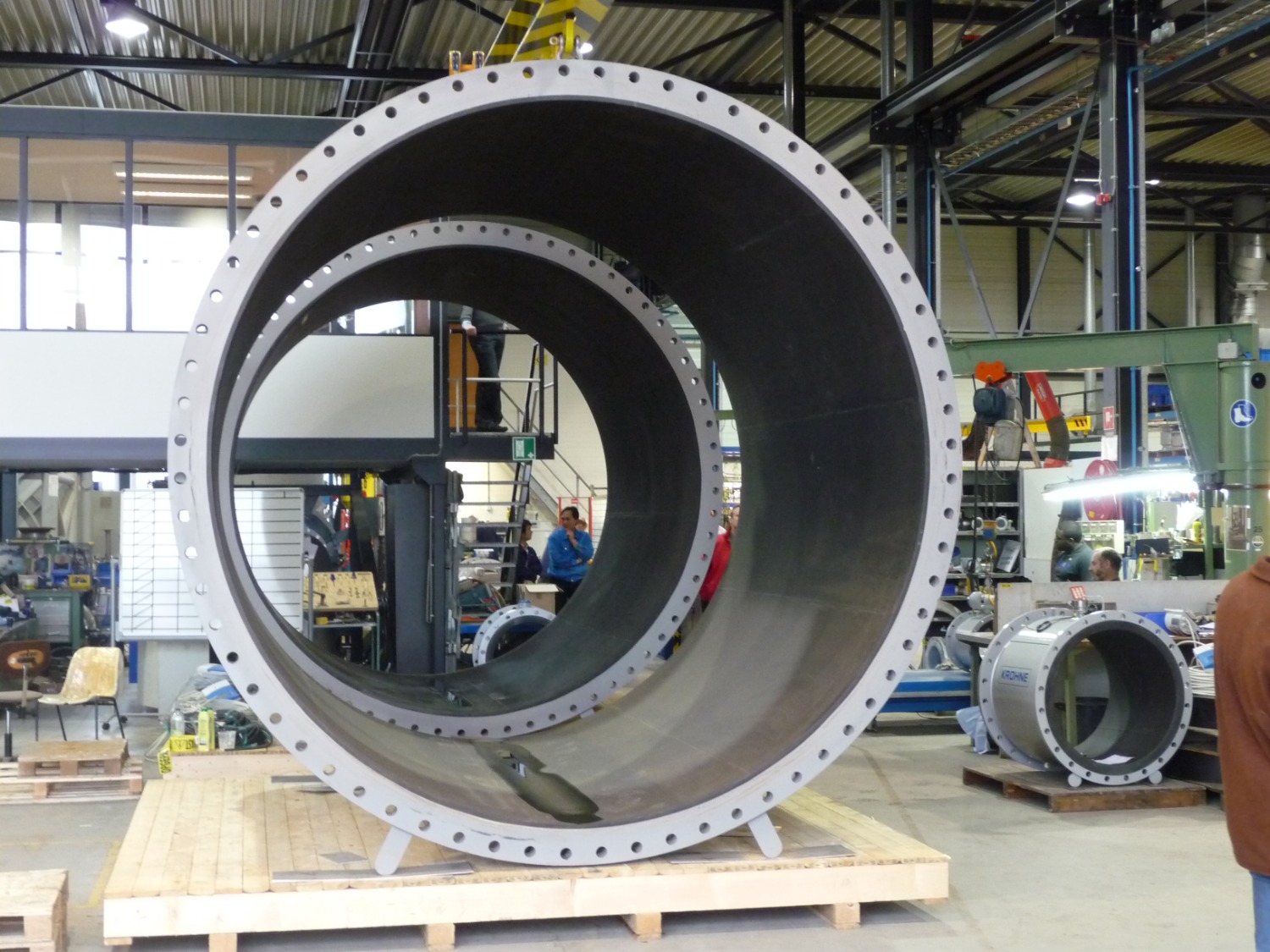
Magnetic flowmeters are displacing traditional technology flowmeters such as DP, positive displacement, and turbine flowmeters. Magnetic flowmeters have significant advantages over these conventional flowmeters. Unlike DP meters, especially orifice plate meters, magnetic meters do not have a primary element that can wear and significantly degrade measurement accuracy. Placing a constriction in the flowstream also introduces pressure loss, which can cost money as throughput is reduced. Unlike positive displacement and turbine flowmeters, magnetic flowmeters have no moving parts. This eliminates a source of unreliability and component wear. For these reasons, and others, magnetic flowmeters are displacing traditional technology flowmeters for some applications.
History: Oldest new-tech meter

Magnetic flowmeters — or magmeters, as they are often called — have also been around longer than any other new-technology flowmeter. The Tobinmeter Company of Los Angeles introduced one of the first commercial magnetic flowmeters in 1952. While the company was based in the United States, in Los Angeles, early installations and demonstrations occurred in Europe, including the Netherlands, where water-industry applications helped establish the technology. However, the Tobinmeter Company also sold its magnetic flowmeters into the United States, making it likely that the United States was where they were first introduced.
Foxboro introduced its magnetic flowmeters in the United States two years later. This puts their introduction well before that of other new-technology flowmeters, including Coriolis (1977), ultrasonic (1963), and vortex (1969). Consequently, magmeters have had more time to penetrate the markets in Europe, North America, and Asia. Today more than 70 suppliers worldwide offer magmeters.
Advantages and Disadvantages of Magnetic Flowmeters
| ADVANTAGES | DISADVANTAGES |
| Medium accuracy | Cannot be used to measure nonconductive fluids or hydrocarbon-based liquids |
| Approved for custody transfer for some water applications | Cannot measure gas or steam flow |
| Can handle sanitary applications | Medium to high initial cost, depending on line size |
| Can be used in large line sizes | Electrodes subject to coating |
| High reliability | Insertion meters have limited accuracy |
| Can handle measurement of dirty liquids | |
| Insertion meters available for large line sizes | |
| Many types of liners accommodate a wide variety of fluid types | |
| Do not create pressure drop |
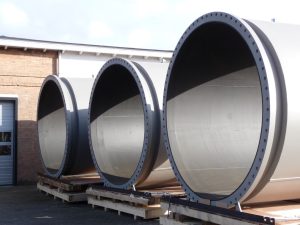
Liners — the ‘secret sauce’ of magnetic flowmeters
Liners enables magmeters to measure both very dirty and very clean liquids. With the appropriate liner option, they can measure the dirty liquids and slurries common to the pulp & paper and wastewater industries, as well as the hygienic and sanitary liquids common to the food & beverage and pharmaceutical industries.
Of the nine main types of liners for magnetic flowmeters the most dominant are PFA (perfluoroalkoxy), PTFE (polytetrafluoroethylene) — Teflon® is a familiar trade name for PTFE made by DuPont — and hard rubber. Hard rubber is widely used for water & wastewater applications.
Liners increase magnetic flowmeters’ durability and reliability, and make it possible to use them with almost any type of liquid. No other flowmeter that measures liquids has such versatility when it comes to the material in the flowmeter that makes contact with the liquid.
Greater conductivity
The inability of magnetic flowmeters to measure nonconductive liquids will always be a barrier to their use in the oil & gas and refining industries, barring some unforeseen technological breakthrough. However, suppliers have succeeded in reducing the amount of conductivity required to measure flow, in part by boosting the amount of power used to excite the magnetic coils, thereby creating a stronger signal. By pushing back the boundaries of conductivity, suppliers are making magnetic flowmeters usable in a broader range of applications.
Areas of growth
One application where magnetic flowmeters have shown the ability to replace other meters is in water utility measurement. This is an area that has long been dominated by positive displacement and turbine meters. One reason is that these meter types have long had industry approvals that magnetic flowmeters were lacking. As industry groups develop standards for the use of magnetic flowmeters in utility measurement, they are displacing positive displacement and turbine meters for some applications. These applications include both industrial and residential applications. While this study does not include residential meters, it does include the use of magnetic flowmeters for industrial applications. Both are potential areas of future growth for magnetic flowmeters.
Another area where magnetic flowmeters have shown growth over the past three years is the chemical industry. Magnetic flowmeters are widely used in the chemical, food and beverage, and pharmaceutical industries, due in part to the variety in choice of linings that make them able to measure a wide variety of liquids. Our data shows an increase in the use of magnetic flowmeters in the chemical, food and beverage, and pharmaceutical industries over the past three years. However, they also have to compete with Coriolis flowmeters, which typically offer higher accuracy. Straight-tube Coriolis meters are popular in these industries because the fluid does not build up around bent tubes and interfere with measurement accuracy.
The sheer size of the magnetic flowmeter market may also limit its growth rate. While revenues from magnetic flowmeter sales exceed those of any other type of meter, it may be that magnetic flowmeters have already penetrated the liquid flow measurement market to a great extent, and that future growth will come from the same industries and applications they have traditionally come from.
If the future growth of this market continues to come from traditional industries and applications, it will depend on growth in the water and wastewater industry, on in-plant measurement, and on replacement orders. Certainly, all these areas are likely to show growth in the future, due to population expansion and the increasing scarcity of clean and potable water. There will also be an increased need for wastewater treatment plants. And fracking will continue to be a growth area, especially as it spreads beyond the United States. Nonetheless, it is unlikely that the already large magnetic flowmeter market will grow at the same rate as the Coriolis or ultrasonic flowmeter markets. These latter two markets have a wider variety of applications than magnetic flowmeters and are also displacing other meter types at a faster rate.
One main advantage of magnetic flowmeters is that they can be used in almost any line size from less than ½ inch to over 120 inches. They are among the most adaptable flowmeters for any line size. Large line size magmeters are used for large pipes in the Water & Wastewater industry, while small ones are used in Food and Pharmaceutical applications. In addition to the inline meters, magmeters also come in the form of insertion meters for large line sizes. While insertion magmeters are not as accurate as the inline versions, they are considerably less expensive.
New developments
While the magnetic flowmeter market is a mature and stable one, some new product developments favor continued growth.
One recent development is the advent and increasing popularity of two-wire magmeters. Four-wire meters have a dedicated power supply. Two-wire meters use the power available from the loop-power supply, reducing wiring and installation costs. While two-wire meters still represent only a small percentage of the total magnetic flowmeters sold, their use continues to grow.
Another important development is battery-operated and wireless magnetic flowmeters. Battery operated meters make it possible to install magmeters in hard-to-reach places. And wireless meters can transmit a receivable signal where the use of wires is impractical. Both of these segments represent fast-growing areas of the magnetic flowmeter market.
Another recent development in product types is the trend toward lower-cost, compact magnetic meters in the United States. Compact meters have traditionally outsold remote meters in Europe, while the reverse has been true in the United States. While compact meters may be losing some ground to remote meters in Europe, they still dominate that market.
Large installed base of magnetic flowmeters
One major growth factor for magnetic flowmeters is their large installed base worldwide. Magnetic flowmeters were first introduced for commercial use in 1952, more than 60 years ago. This puts their time of introduction well before that of other new technology flowmeters, including Coriolis (1977), ultrasonic (1963), and vortex (1969). Because they were introduced so much earlier than other new-technology meters, magnetic flowmeters have had more time to penetrate the markets in Europe, North America, and Asia.
Located within the large installed base are industry segments that magnetic flowmeters diversely populate. While the Water & Wastewater industry remains the single largest industry segment for magmeters, the chemical and food & beverage industries together are much larger. This sort of industry diversity can expose magmeters to the benefits of growth within a single industry in which it may participate on a concentrated basis (e.g., chemicals over the last few years). It may also work against magmeters as well, such as in the delays to water & wastewater projects attributable to state or national governments dependent upon oil receipts, and which receipts declined during the oil price depression of 2014–2016. These macroeconomic factors have played a large role in the growth profile of magnetic flowmeters during the last several years.
Installed base is a relevant growth factor because often when ordering flowmeters, especially for replacement purposes, users replace like with like. The investment in a flowmeter technology is more than just the cost of the meter itself. It also includes the time and money invested in training people how to install and use the meter. In addition, some companies stock spare parts or even spare meters for replacement purposes. As a result, when companies consider switching from one flowmeter technology to another, they typically consider more than just the purchase price. The large installed base of magnetic flowmeters worldwide will continue to be a source of orders for new meters in the future.
The large number of suppliers
There are more magnetic flowmeter suppliers than any other type of new technology meter except for ultrasonic meters. With over 70 suppliers worldwide, users are assured of having a steady stream of new products and product upgrades. Because the suppliers are distributed throughout the world, users can select high quality magnetic flowmeters from companies in their geographic region. The major European suppliers include Endress+Hauser, KROHNE, and ABB. Major suppliers in the United States include Emerson Rosemount and Foxboro by Schneider Electric. ABB also has manufacturing operations in the United States. In Japan, major suppliers include Yokogawa, azbil, and Toshiba.
Besides the major suppliers, there are a number of smaller suppliers that have specialty or niche products, often distributed mainly in their own geographic region. Europe has quite a few specialty suppliers of this type. Some of these companies only manufacture magmeters, while others manufacture several types of flowmeters. Still others manufacture magnetic flowmeters, but also resell other types of meters to broaden their product line. The presence of so many magnetic flowmeter suppliers worldwide will continue to be a growth factor for magmeters.
Frontiers of research

Measuring liquids with lower conductivity values
Magnetic flowmeter suppliers have cut into the market share of Doppler meters by improving the ability of magnetic flowmeters to measure liquids with lower conductivity values. Part of this success has been due to more advanced signal processing methods and more sophisticated software. This is still an area for ongoing research, and it can be expected that suppliers will continue to be able to measure ever low conductivity liquids. No one has yet made a magnetic flowmeter that will measure the flow of hydrocarbons, however.
Continued advances in liners
Liners are especially valuable for sanitary applications, and also for wastewater applications, and a wide variety of liners are already available. Despite all the progress that has already been made, expect new types of liners as magnetic flowmeters expand their reach and new applications emerge.
Continued focus on market strengths
Magnetic flowmeters have strong penetration in their areas of strength: liquid measurement in the water & wastewater, chemical, food & beverage, pharmaceutical, and biotech industries. They can handle almost any line size, from the very small to the very large, and excel at sanitary applications due to their ability to incorporate sanitary-friendly liners. While ultrasonic and differential pressure flowmeters are alternatives for some applications, magnetic flowmeters have a large installed base and there does not seem to be a strong movement to alternative technologies.
Given the strength of magnetic flowmeters in the above industries, a frontier of research is to focus on developing more products specifically designed for these industries. One option is to incorporate a control valve with a magnetic flowmeter to provide control as well as measurement Another is to look more closely at the needs of the beverage industry, including breweries and microbreweries, which already use both magnetic and Coriolis meters. Magnetic flowmeters do compete with Coriolis meters in the small line sizes, but magnetic flowmeters have a price advantage there. Developing customized solutions for applications in the five industries mentioned above that may incorporate additional instrumentation could be a winning solution for a magnetic flowmeter company that wants to gain market share.